


Photography by Michael Pizzoli
Perched high upon twelve meter limestone cliffs above the turquoise expanse of the Caribbean Sea, the ancient fortress city of Tulum stands as a monument to human endurance and cosmological precision. Long before modern wanderers carved paths along the Riviera Maya, this sanctuary flourished as a vital hub for trade, maritime navigation, and astronomical observation. Known original to its Maya builders as Zama, meaning City of Dawn, Tulum was designed to face the rising sun, receiving the first golden light of every new morning.
Renowned photographer Michael Pizzoli spent a full day immersed in this historic landscape, capturing the quiet grandeur and dramatic interplay of light and stone across the ruins. Through his lens, the ancient city reveals its timeless secrets, evoking the adventurous spirit of classic exploration narrative.
THE CITY OF DAWN AND DEFENSE
Tulum holds a unique position within Maya history. Unlike many older inland strongholds that peaked during the Classic Period, Tulum reached its zenith during the Late Postclassic era between the thirteenth and fifteenth centuries. It was one of the last cities built and inhabited by the Maya people, remaining fully active until Spanish expeditionary fleets began appearing off the coast in the early sixteenth century.
The name Tulum itself translates to wall or fence in Yucatec Maya, referring to the impressive defensive walls that surround the site on three sides. Standing up to five meters high and eight meters thick in places, these stone fortifications protected the elite inhabitants, priests, and sacred ceremonial grounds from outside threats. The ocean side required no wall, protected naturally by steep sea cliffs and treacherous coral barrier reefs below.
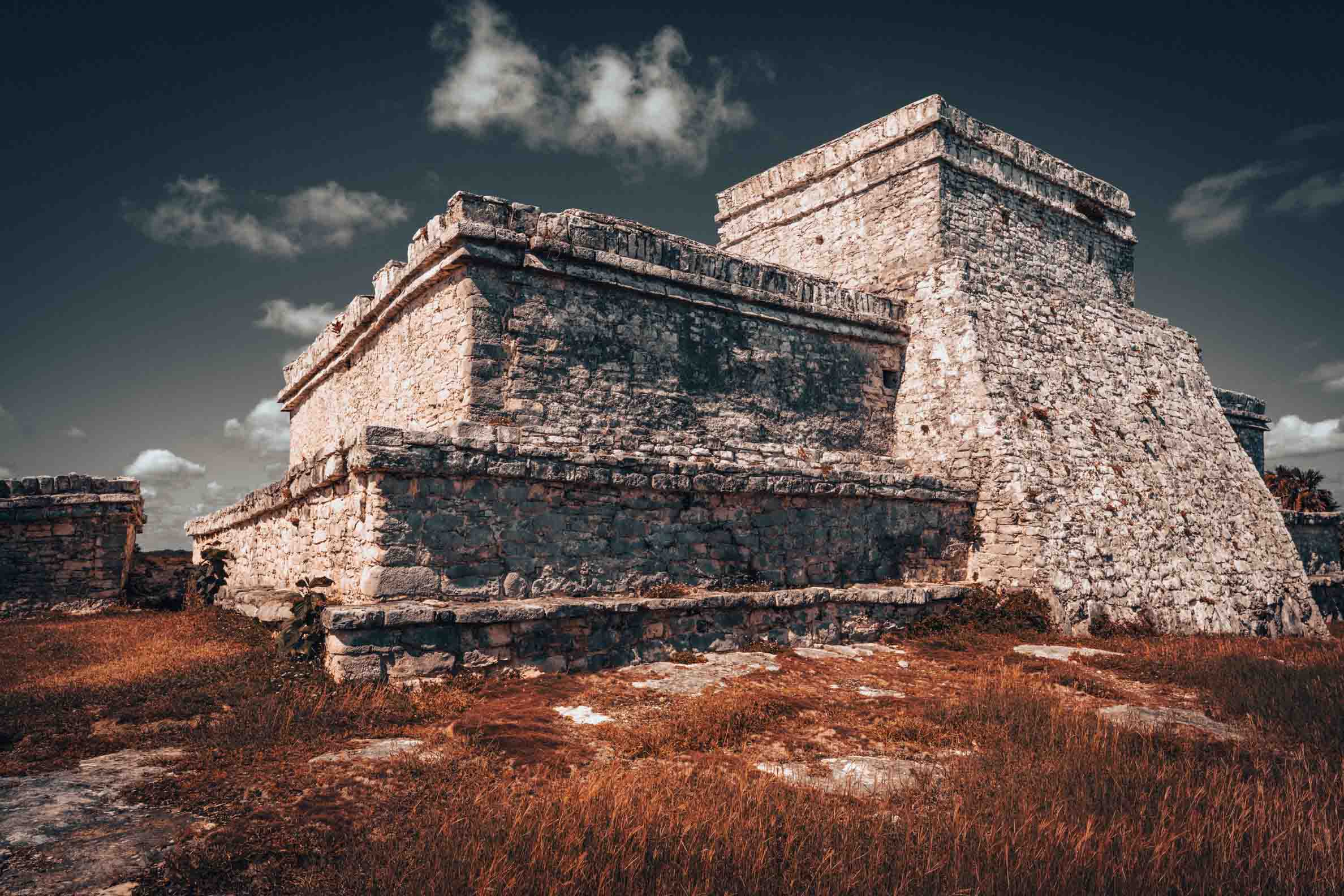
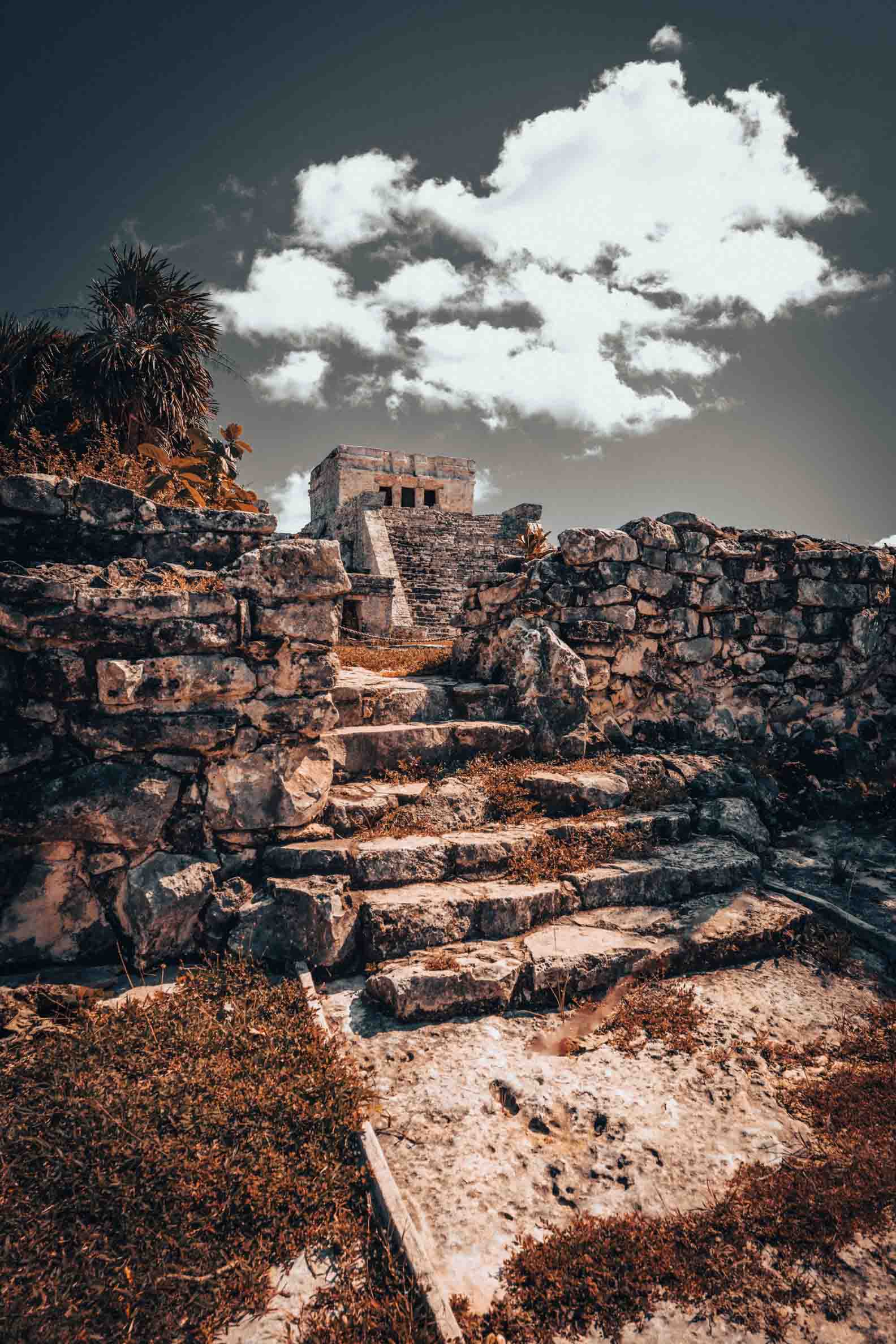
In one striking capture, we see the sheer geometric majesty of El Castillo, or The Castle, rising sharply against a moody sky. As the tallest structure in the complex, El Castillo served a dual purpose. It functioned both as a sacred temple and as an ingenious lighthouse. Two beacon lights burning within the upper windows lined up perfectly with a natural gap in the barrier reef offshore, guiding Maya trade canoes safely through the razor sharp corals during midnight coastal navigations.
ARCHITECTURE OF THE SUN AND OCEAN
Walking through the central precinct of Tulum, one is immediately struck by the sophisticated urban planning and distinct architectural style. The structures here are compact, sturdy, and built directly onto the rugged topography of the coast.
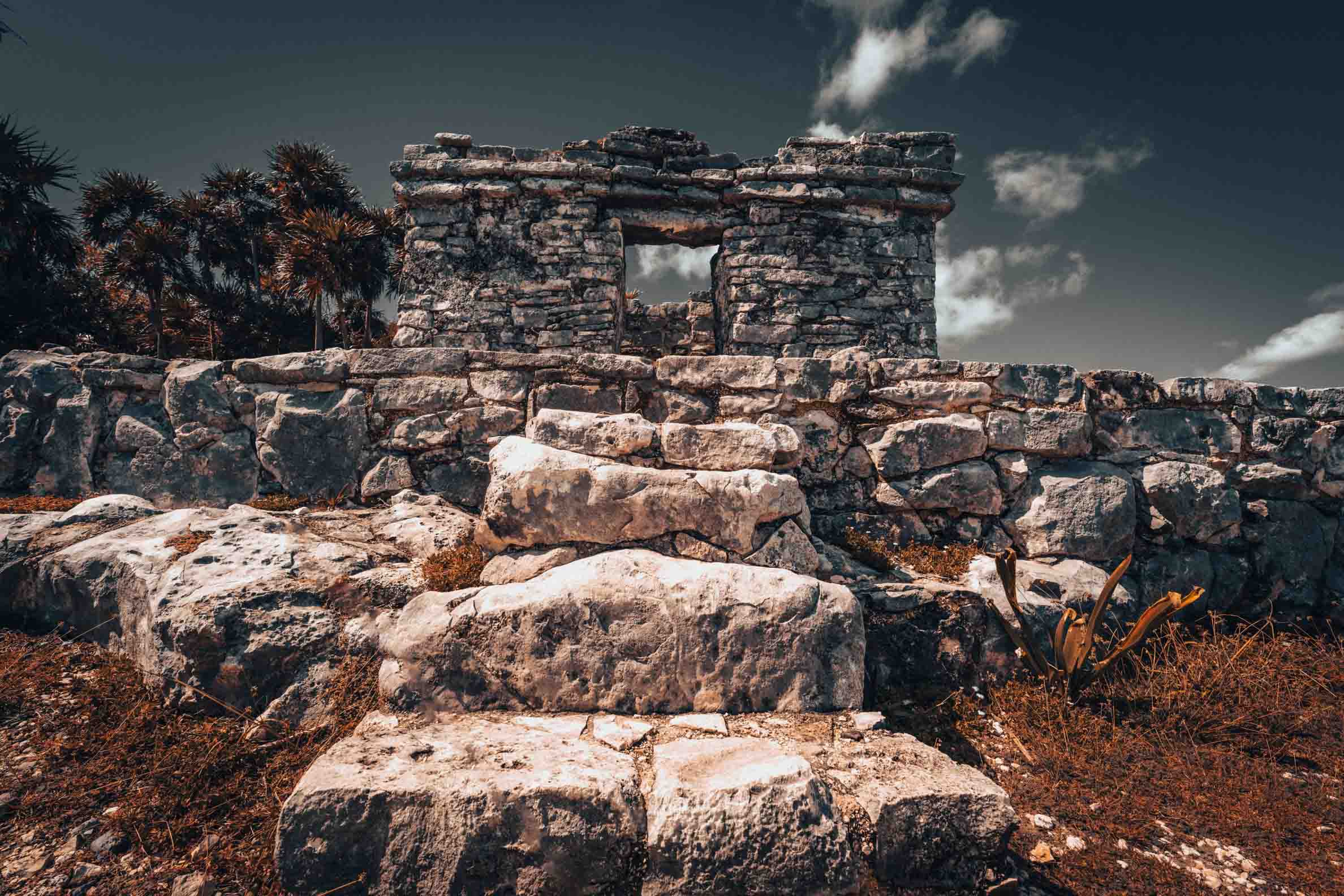
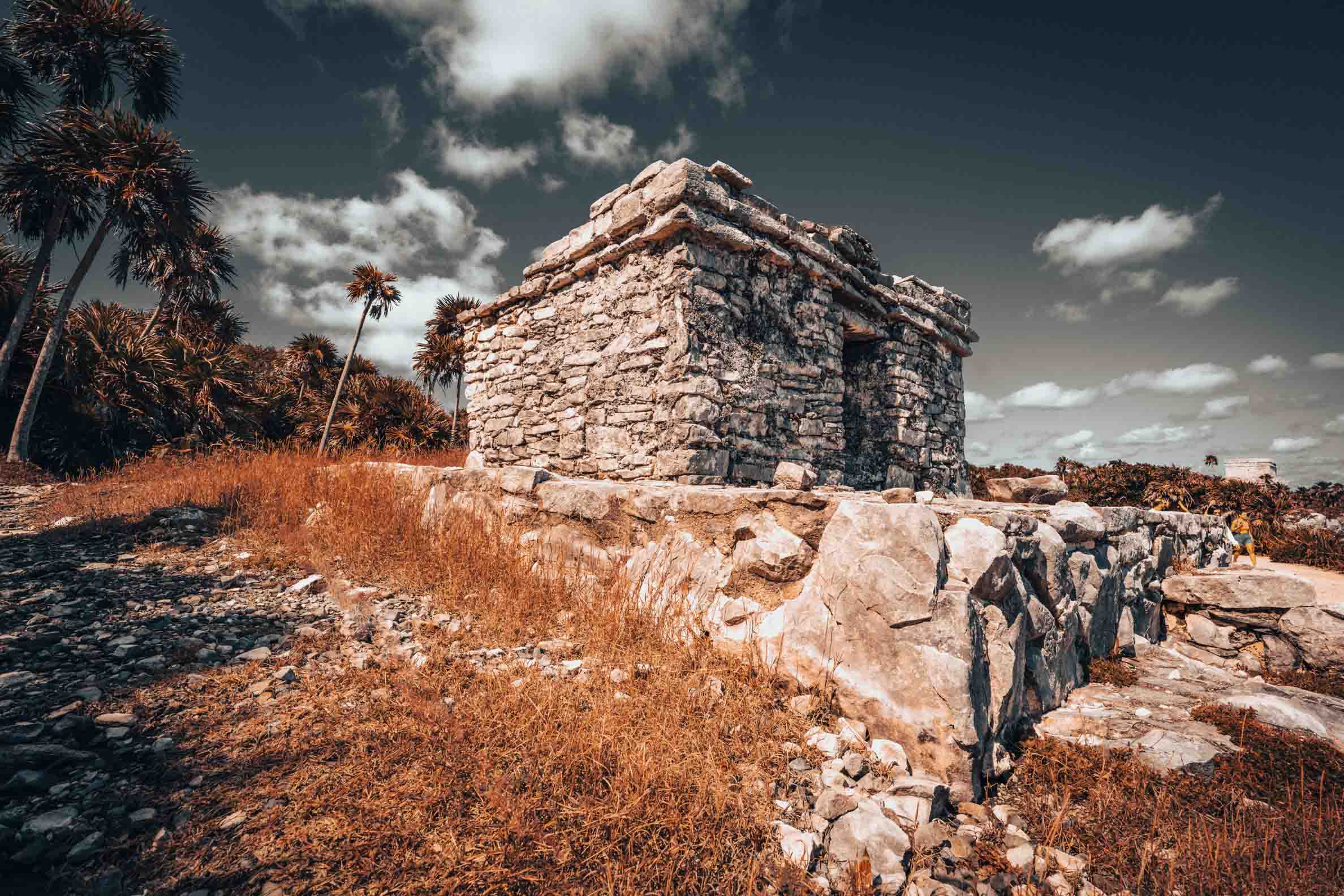
The weathered limestone blocks of a residential shrine show the raw, tactile quality of ancient craftsmanship. Palm trees sway gently in the background, framing a structure built to withstand century after century of tropical storms and salty ocean winds. Nearby, an intimate, head on perspective of stone steps leading to a central doorway reveals the sky through a framed aperture beyond, demonstrating how Maya architects intentionally incorporated natural elements and horizon views directly into their spiritual spaces.
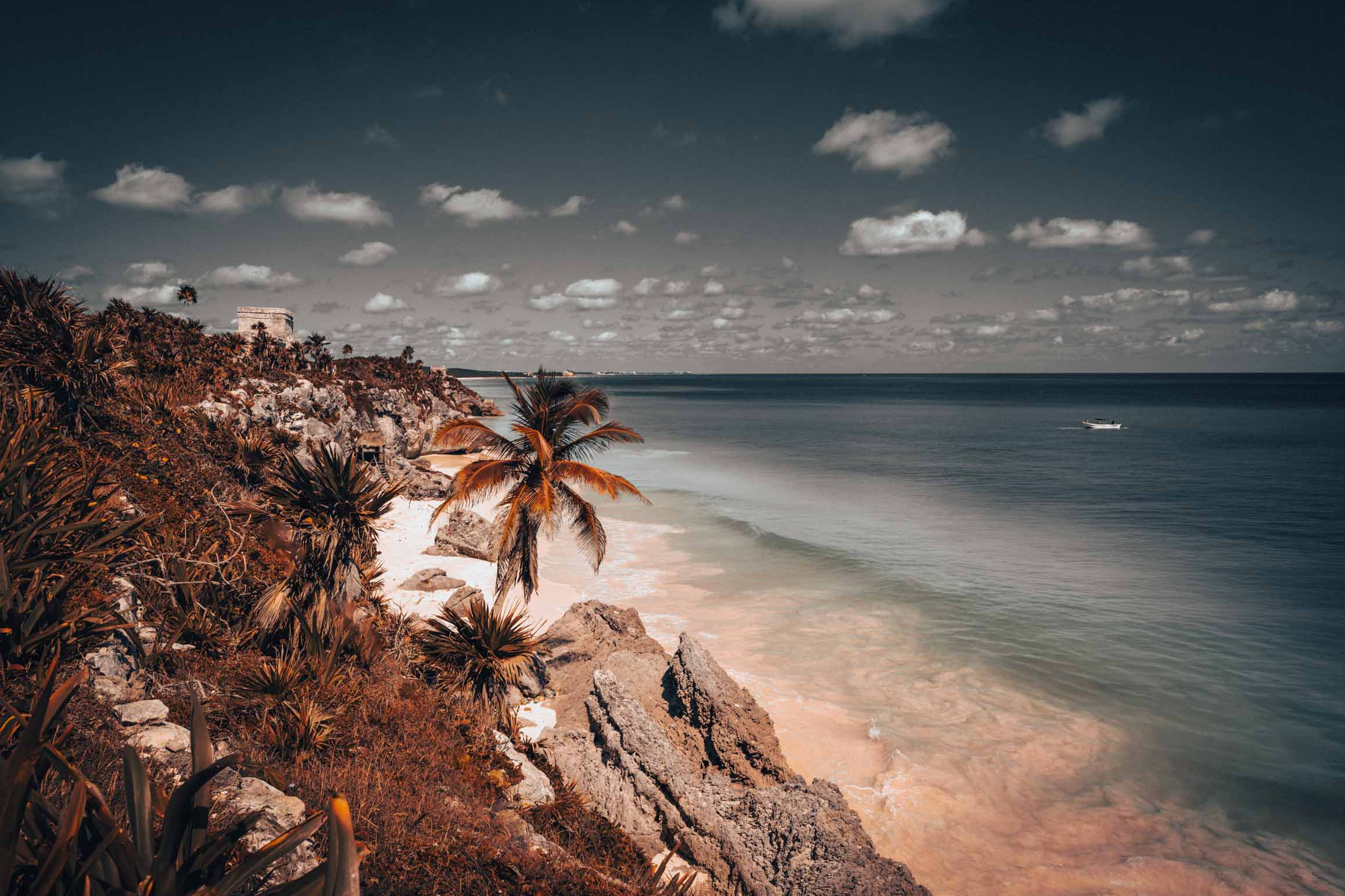
The geographic context becomes breathtakingly clear looking down from the cliff tops, where golden limestone walls give way to lush coastal palm vegetation, pristine white sand beaches, and the infinite horizon of the Caribbean Sea. A single small vessel drifts in the deep blue distance, echoing the ancient merchant canoes that once anchored here laden with jade, obsidian, copper bells, and precious quetzal feathers traded along sea routes reaching as far as Central America.
THREADS OF ANCIENT TRADE AND POWER
At its height, Tulum functioned as the primary seaport for the inland city state of Coba. It was a thriving cosmopolitan node where goods, religious ideas, and astronomical calculations converged.
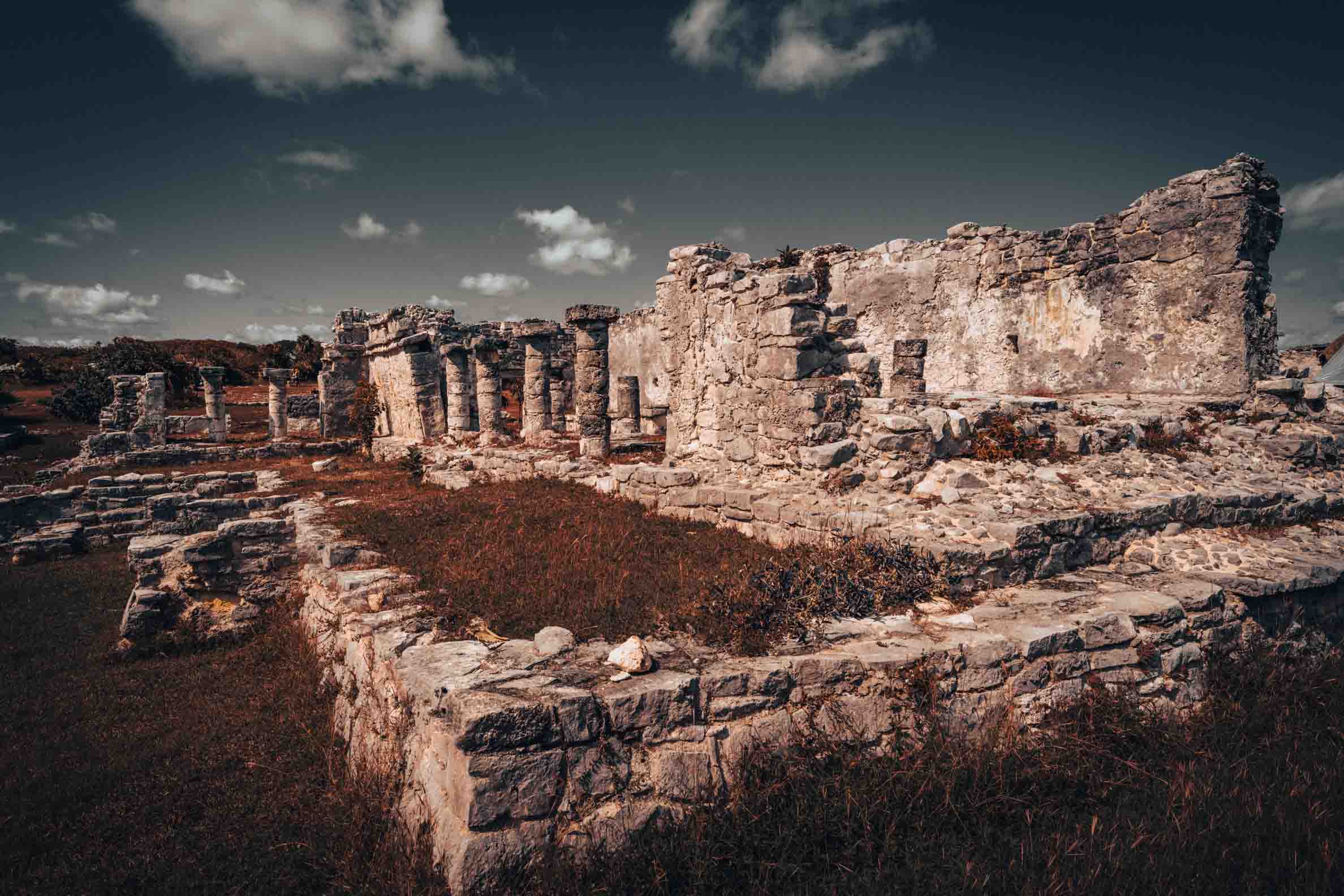
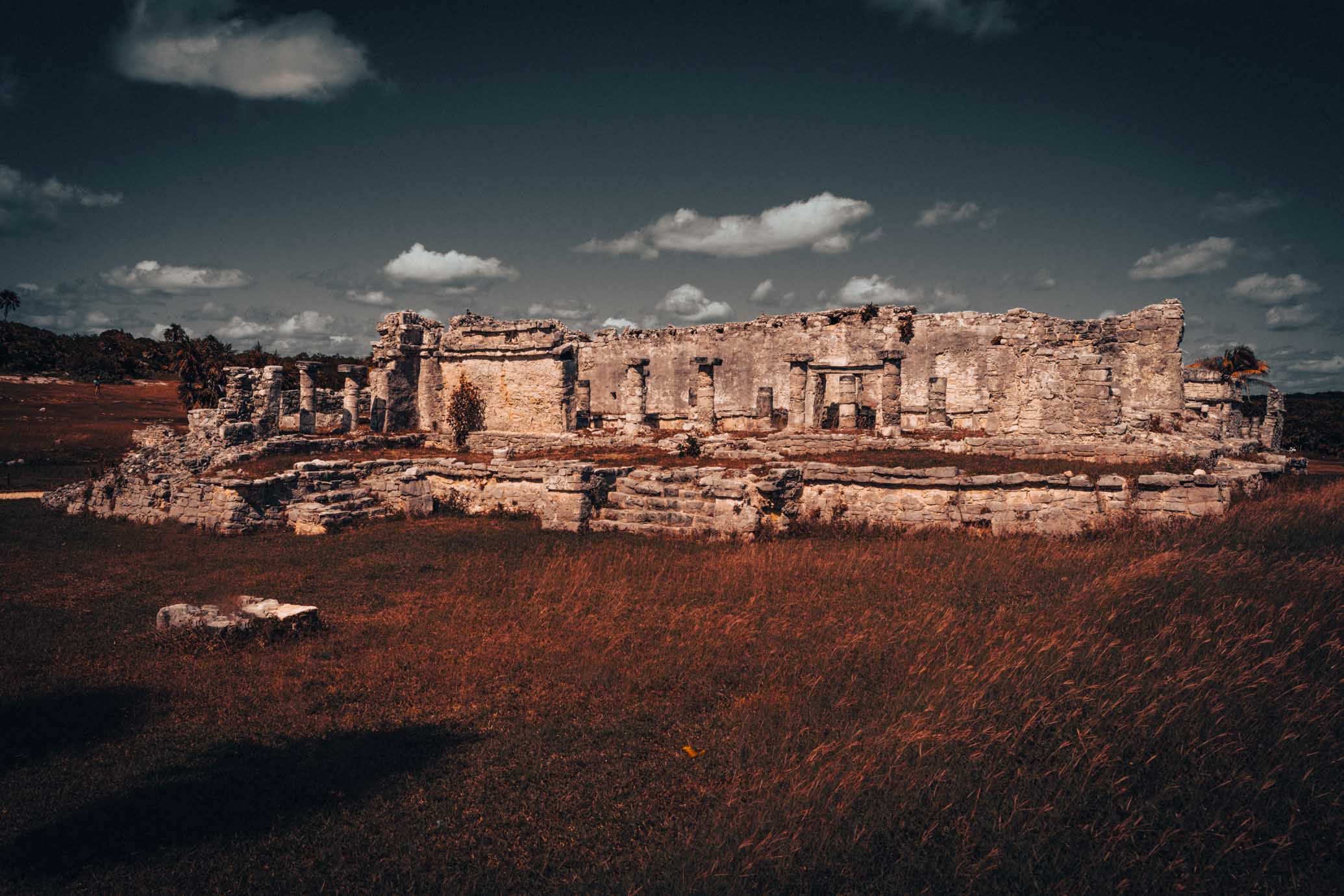
Wide angle perspectives depict the extensive elite residential quarters and administrative halls known as the Palace of the Halach Uinic (the Supreme Leader). The colonnaded entrances, stone pillars, and wide open plazas shown in these vistas speak to a complex social order. Here, rulers received emissaries, tax collectors tallied goods, and scribes recorded celestial movements onto bark paper codices.
Pizzoli captures the quiet stillness of these open spaces, where short grass and sunbaked stone reflect the intense heat of midday. Lower stone stairways lead the viewer eye upward toward the summit temples, emphasizing the literal and symbolic hierarchy of Maya society. Higher ground was always reserved for the divine and those who claimed direct lineage from the gods.
GUARDIANS OF THE FAÇADE
Perhaps the most famous architectural detail at Tulum is the recurring motif of the Descending God (also associated with the Diving God or the God of the Sun and Bee). In a stunning close up photograph, Pizzoli captures the Temple of the Descending God, famous for its preserved stucco relief carving situated directly above the main entrance doorway.
The carved deity appears head first, descending from the heavens with feet outstretched overhead, holding an object or offering. Archeologists continue to debate the precise meaning of this figure. Some link him to Ah Muzen Cab, the Maya god of bees and honey, a crucial export for the region. Others view him as the setting sun descending into the underworld every evening, only to be reborn at dawn across the eastern ocean horizon.
Adding a touch of living wilderness to the scene, a sunbathing iguana rests silently at the base of the stone doorway. These ancient reptiles remain the true modern guardians of Tulum, lounging along the ancient stones just as their ancestors did hundreds of years ago when priest kings walked these halls.

THE ENDURING LEGACY
As the sun began its descent across the western jungle canopy, ending Michael Pizzoli day long exploration, the true magic of Tulum revealed itself. It is a place where human history, brilliant engineering, and untamed natural beauty exist in perfect harmony.
Tulum fell into quiet silence decades after the Spanish arrival, as introduced European diseases devastatingly reduced the indigenous populations across the peninsula. Yet the stone monuments stood firm, preserved by the tropical breeze and forgotten under dense foliage until nineteenth century explorers reawakened world interest in Maya civilization.
Today, through the lens of Empyreal Magazine, Tulum remains a testament to human curiosity and artistic brilliance. Its stone towers still face the sea, quietly awaiting the first light of dawn.