



Arrival at the Ancient City
On a brilliant sunlit day in the Yucatán Peninsula, the ancient city of Chichén Itzá revealed itself in all its monumental grandeur. Rising from the surrounding jungle like a geometric vision carved from stone, the site remains one of the most extraordinary archaeological treasures in the world. Empyreal Magazine documented the historic complex through a sweeping photographic tour, capturing the interplay of light, shadow, and architecture that defines this legendary place. Every structure at Chichén Itzá tells a story of innovation, ritual, and cultural exchange that shaped the civilization of the ancient Maya.
The Rise of a Maya Metropolis
Chichén Itzá was one of the most powerful cities of the Maya world, flourishing roughly between the ninth and twelfth centuries. Located in present day Mexico’s Yucatán Peninsula, the city became a regional center of trade, religion, and political authority. Its strategic location near underground water sources known as cenotes made it possible for a large population to thrive in an otherwise dry limestone landscape.
The name Chichén Itzá translates roughly to “at the mouth of the well of the Itzá,” referencing the sacred cenotes that were central to both survival and ritual life. Archaeological evidence suggests that the city served as a cosmopolitan hub where Maya traditions merged with influences from central Mexico, particularly the Toltec culture. This fusion is visible throughout the architecture and iconography of the city.
El Castillo: A Pyramid of Time and Astronomy
At the heart of Chichén Itzá stands the iconic pyramid known as El Castillo, or the Temple of Kukulcán. The structure rises about ninety eight feet above the plaza and consists of four staircases ascending the pyramid’s terraces. Each staircase contains ninety one steps. When combined with the platform at the top, the total equals three hundred sixty five, corresponding to the days of the solar year.
This pyramid is far more than an imposing monument. It is an astronomical calendar carved in stone. During the spring and autumn equinoxes, sunlight creates a remarkable illusion along the staircase on the northern side of the pyramid. Triangular shadows appear to form the body of a descending serpent that aligns with a sculpted serpent head at the base of the stairs. The effect symbolizes the feathered serpent deity Kukulcán returning to earth and demonstrates the Maya’s extraordinary understanding of solar movement and architectural alignment.

The Great Ball Court
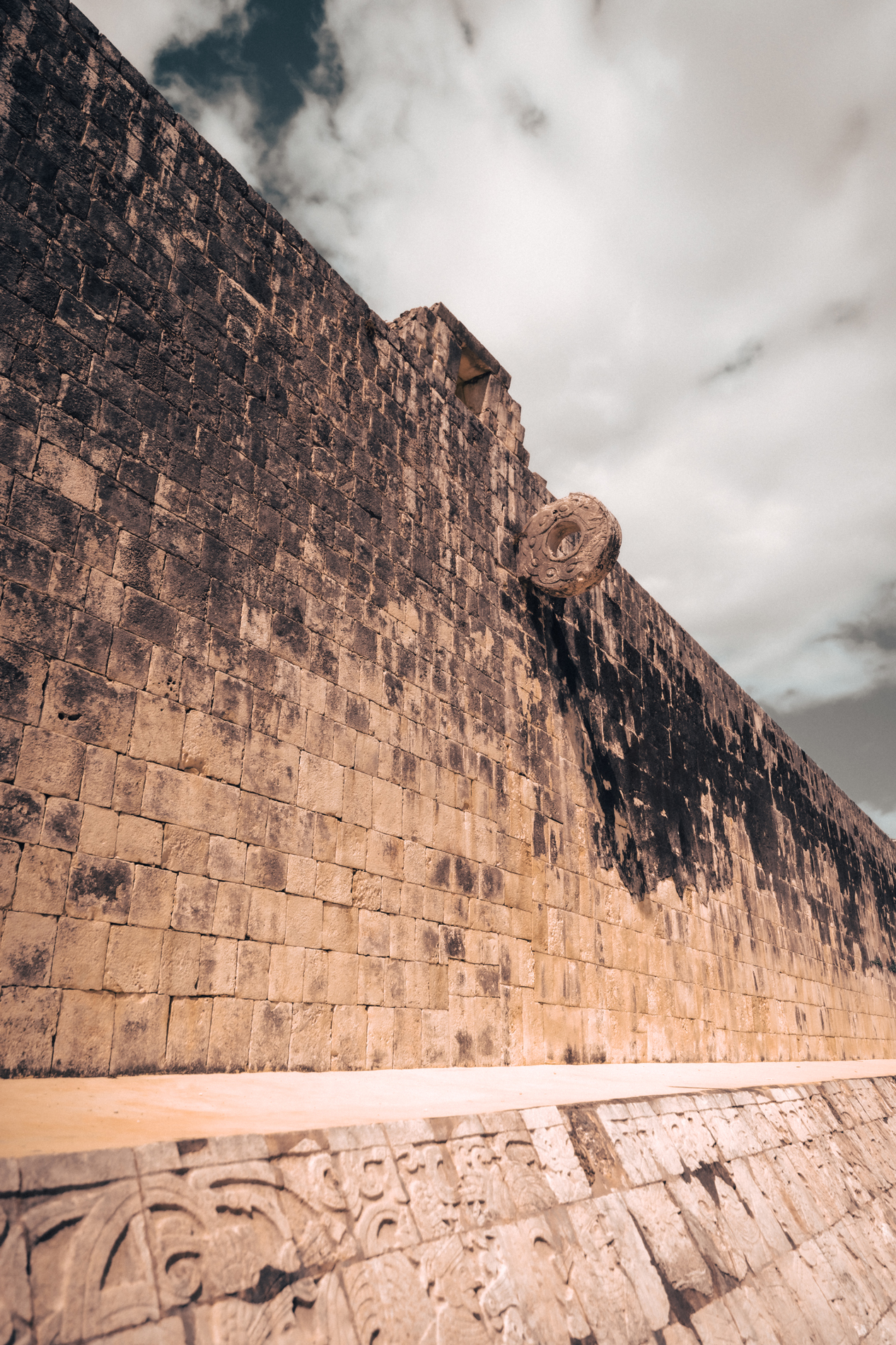
A short distance from El Castillo stands the Great Ball Court, the largest known ball court in Mesoamerica. Measuring approximately five hundred fifty one feet long, the massive playing field is surrounded by towering stone walls that amplify sound in remarkable ways.
The ancient Maya played a ritual ball game here known as pok ta pok. The game was played using a solid rubber ball which players attempted to strike through stone rings mounted high on the walls without using their hands. The contest carried deep religious meaning and scholars believe the game symbolized cosmic struggle between forces of life and death.
Relief carvings along the walls depict dramatic scenes of players and ritual sacrifice. One famous panel shows a decapitated player from whose neck emerges seven streams of blood transforming into serpents, an image rich with symbolic meaning tied to rebirth and fertility.
Temple of the Warriors and the Thousand Columns
Another remarkable complex within Chichén Itzá is the Temple of the Warriors, a stepped pyramid fronted by an expansive field of stone columns. Known as the Thousand Columns, the area once supported a massive roofed hall that likely served as a gathering space for political or ceremonial events.
At the summit of the temple sits a sculpture known as a Chac Mool, a reclining figure holding a bowl on its stomach. These sculptures were used to receive offerings, possibly including incense, food, or other ritual items dedicated to the gods.
The columns below are carved with images of warriors and deities, evidence of the militaristic influence that shaped the city during its later period.